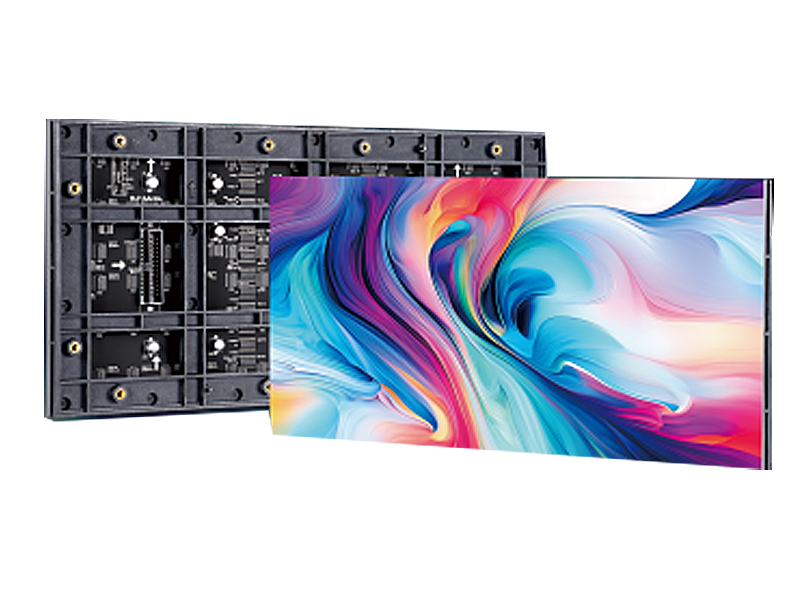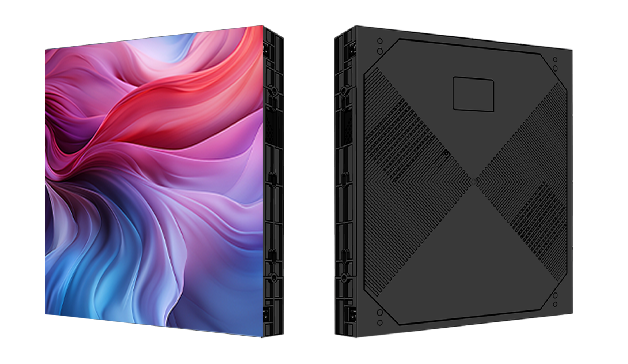
Smart Classroom 05 | Immersive LED Screens: Why Does Walking In Feel Like Falling into a Painting?
Planetarium starry skies, shopping mall underwater wonderlands, concert immersive visuals – eye-catching LED immersive effects are everywhere now, becoming must-visit photo spots.
Many people mistakenly think they are just a simple splice of multiple large screens, but there is far more expertise behind it.
In this episode, we will explain the imaging principles and key installation points of immersive LED in a clear, straightforward way – helping you get up to speed quickly.
1. What is an Immersive Screen?
A regular LED screen is like a window: you stand outside looking in, and the image is flat.
An immersive LED screen is like a moving room: walls, floor, even ceiling are wrapped in displays. You walk in, and images surround you from every direction.
It is not a single device – it is a spatial visual system. Through seamless splicing of multiple screens plus synchronized playback, it breaks the boundary of you watching a screen and turns it into you inside the image.
✅ Simply put: a regular screen lets you watch a story. An immersive screen lets you step into the story.
2. How Does It Trick the Eye?
An immersive experience works because of three invisible collaborations – none can be missing:
▶ Truly Seamless
LCD splicing has black bezels. Projection fears light and uneven walls. LED screens can achieve pixel-level seamless splicing, with barely visible seams. Only when the image flows as one can your eye avoid being cut off.
▶ Perfect Synchronization
Imagine an orchestra: if the violins are half a beat behind, the whole piece falls apart. The same goes for immersive screens – multiple screens must breathe together, with the same frame lighting up at the exact same moment. Even a 0.01-second difference will cause tearing and ghosting as you move, instantly breaking the illusion.
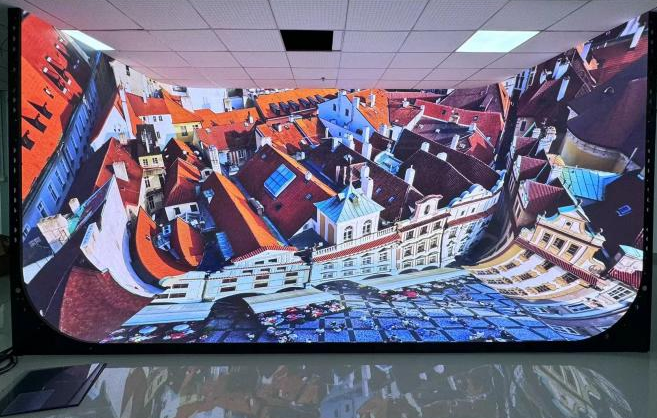
▶ Pre-Bent Content
If you project a flat video onto a corner or curved surface, it will distort. Immersive content is created with the space's shape in mind – stretched, warped, and aligned in advance – so that when it is played on the screens, it fits perfectly. Like wrapping a gift: fold the corners just right, and the pattern lines up.
3. Where Have You Seen It?
Immersive screens have long left the lab and become experience accelerators across industries:
Corporate Showrooms / Brand Pavilions
Folding screens plus floor displays let visitors walk through a product's history. Widely used in launches and roadshows – the visual impact far exceeds PowerPoint.
Cultural Night Tours / Theme Parks
Immersive caves, light corridors, interactive floors. Step on them, and ripples or flowers bloom – perfect for photo sharing and driving repeat spending.
Retail Pop-Ups / New Retail
Wrap-around window displays in mall atriums, brand pop-ups. Strong visuals draw foot traffic and dwell time, paired with QR code interactions to directly boost conversion.
Concert Stages / Live Performances
Main screens extend to the sides and floor, shifting with the music. As performers move, the background syncs in step – turning the stage into a moving theater.
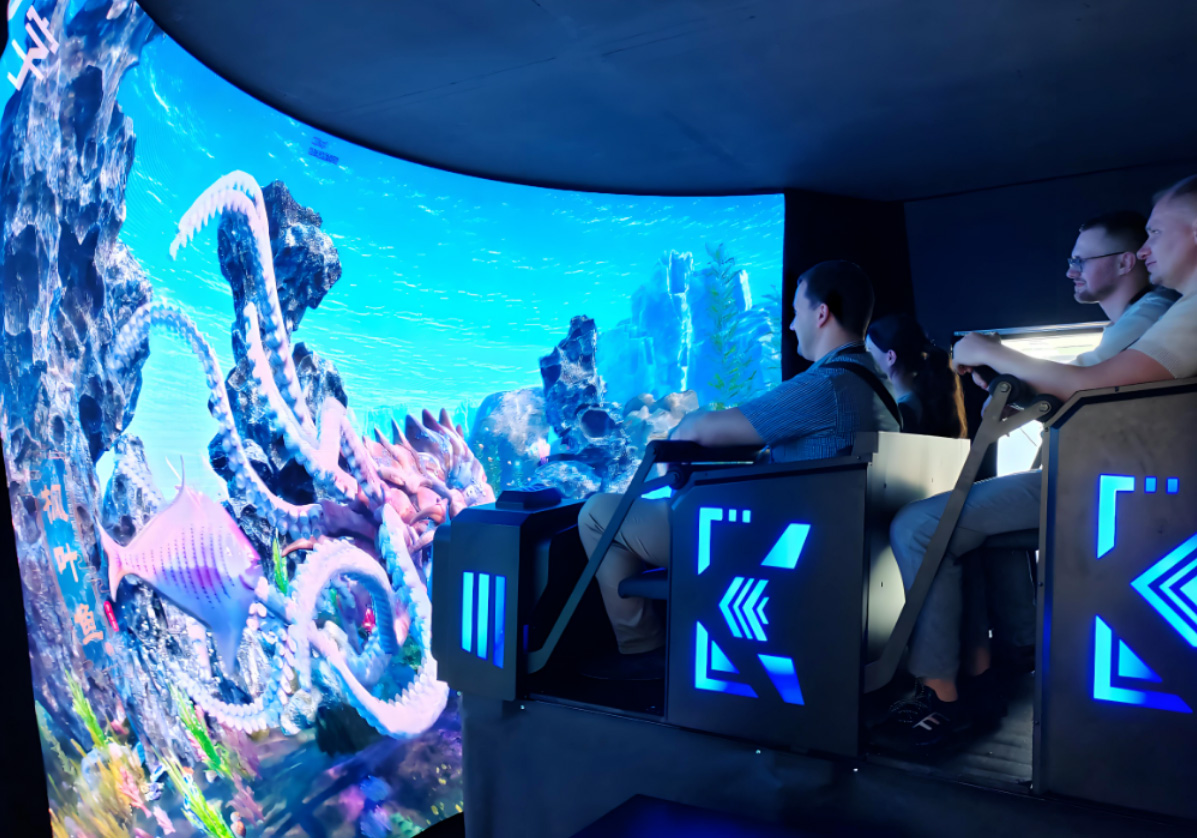
Common trait: It is not about chasing the highest specs – it is about getting the atmosphere right. Space, content, lighting, and sound must all be designed together to achieve true immersion.
4. Beginner's Guide to Avoiding Pitfalls
If you are planning a showroom, store, or event and want to add immersive screens, understand these three points first to save yourself trouble:
Mistake 1: The more expensive the hardware, the better the result.
Truth: Hardware is just the canvas; content is the paint. A million-dollar screen playing stretched, distorted free videos will deliver a worse experience than a cheaper screen with custom content. Suggested budget split: Hardware 40% / Content Production 30% / Space and Setup 20% / Tuning 10%.
Mistake 2: Any empty room will work.
Truth: Immersive requires proper spatial proportions. Low ceilings feel oppressive. Too small a space limits movement. Wall load-bearing or utility issues can compromise safety. Best to involve the display team early in design – do not find out after installation that you cannot even turn around.
Mistake 3: Just install it and forget about cooling.
Truth: When screens wrap a space, heat builds up easily. You must reserve hidden ventilation or use a front-service design, meaning parts replaced from the front. Otherwise, in summer, after two hours of operation, the screens will automatically dim – or even go black as a protective measure.
| Aspect | Traditional Flat LED | Immersive LED System |
|---|---|---|
| Viewing relationship | Outside looking in | Surrounded by image (inside the scene) |
| Seamlessness requirement | Moderate seams acceptable | Pixel-level seamless mandatory |
| Synchronization tolerance | Frame drift not obvious | <0.01 sec, otherwise ghosting |
| Content creation | Standard flat videos | Pre-distorted, spatial mapping required |
Decision Helper: Which Immersive Approach Fits You?
| Scenario | Recommendation |
|---|---|
| Small showroom (≤30 sqm) | 2-3 wall fold + floor touch LED, P1.8–P2.5 fine pitch |
| Large brand pavilion / museum | Full cave or 360° cylinder, COB fine pitch P1.2–P1.5, budget content 35%+ |
| Temporary pop-up / roadshow | Rental curved LED P2.6–P3.9, lightweight magnetic cabinets |
| Concert / live event | Main screen + wing + floor LED, high refresh ≥3840Hz, P3.9–P4.8 |
5. Interaction and Next Episode Preview
Today's question: Where have you recently seen an immersive screen that left an impression – a science museum, a mall, or a concert? What moved you most – the visuals, the interaction, or the atmosphere?
Next episode preview: Smart Classroom 06 | Transparent, Curved, and Irregular Screens: How to Balance Image Quality with Structural Safety in Creative Displays?