Smart Classroom 04 | How Does LED Display Installation Method Determine Long-Term Costs and Maintenance Difficulty?
Installation method determines long-term operating costs & safety — avoid hidden engineering risks
After finalizing the LED screen parameters and protection solutions, the installation phase is often where mistakes are most likely to occur. Insufficient reserved space, inadequate wall load-bearing capacity, messy wiring and other issues will directly affect safety, operation and maintenance, as well as project acceptance.
LED display installation is not merely a simple wall-mounting process; it also determines long-term operating costs and overall safety. In this issue, we break down mainstream installation methods and maintenance principles to help you avoid hidden engineering risks.
1. How to Match Installation Methods with Maintenance Access?
Choosing an installation method is essentially a balance between site conditions and usage requirements. The industry mainstream consists of three structural installation types + two maintenance logics, typically used in combination:
▶ Wall-Mounted (Most Space-Saving, Relies on Wall)
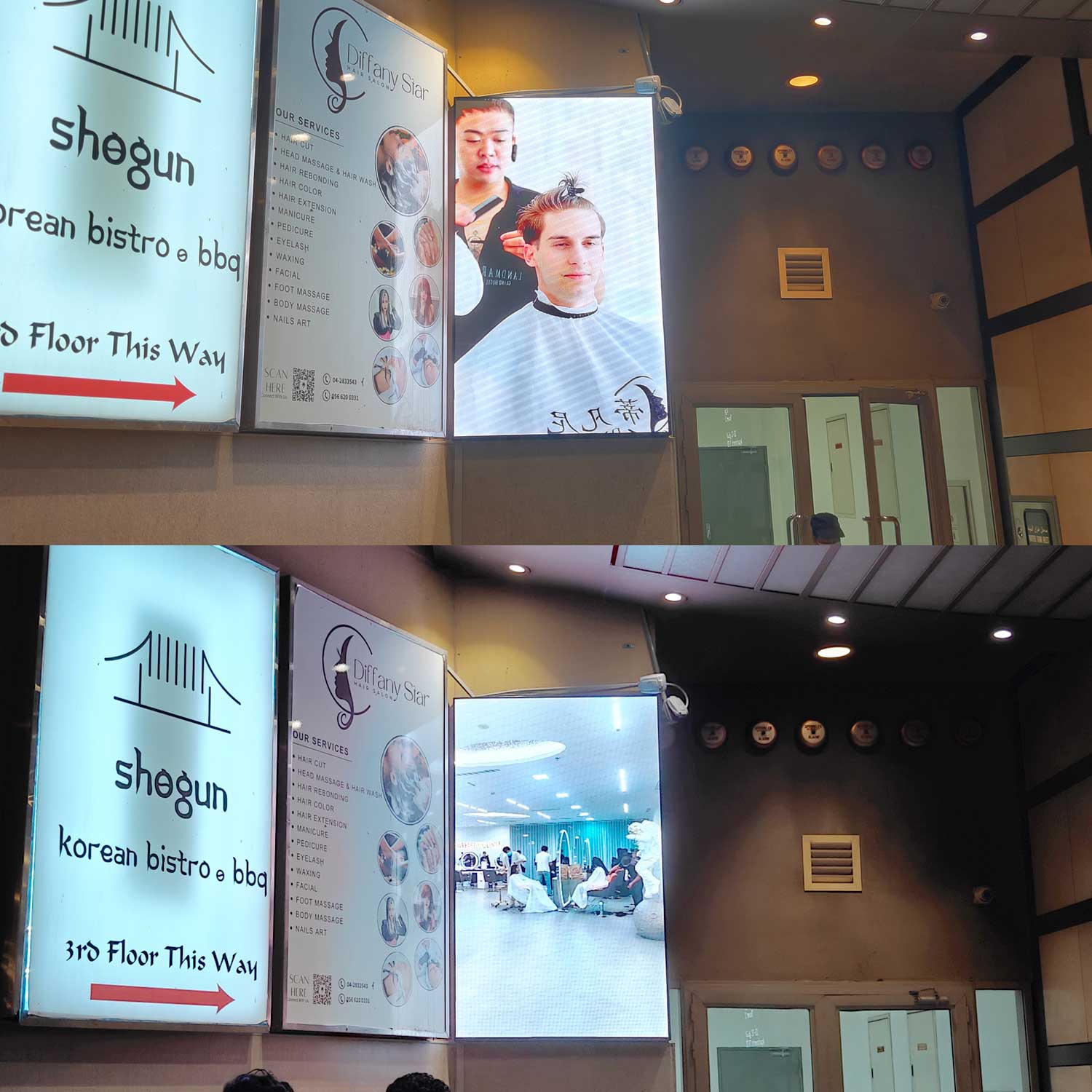
How it works: The screen is fixed to the wall using a steel-structure mounting frame.
Best for: Conference rooms, showrooms, lobbies, command centers, small outdoor advertising screens – typically indoor fixed installations.
Key requirement: The wall must be a load-bearing wall or have been reinforced with a steel structure. Drilling directly into ordinary brick walls or lightweight partitions creates a falling risk.
▶ Suspended / Ceiling-Mounted (No Floor Space, Relies on Overhead Structure)
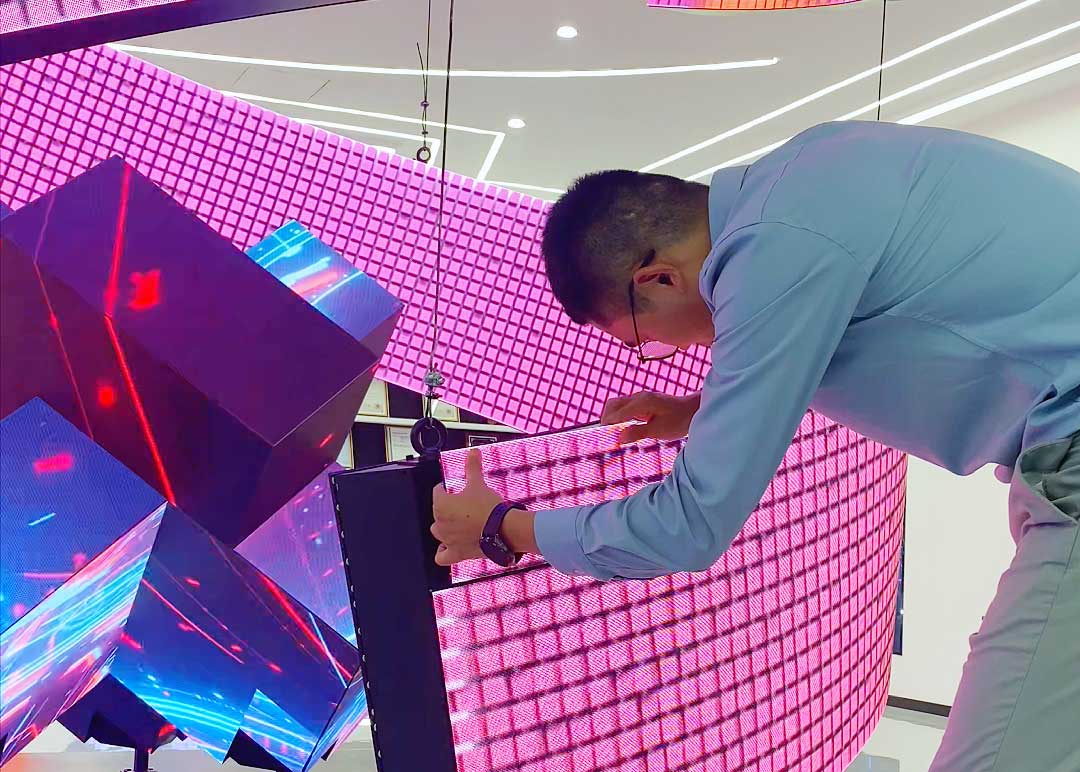
How it works: The screen is suspended from a ceiling or steel beam using steel cables, chains, or trusses.
Best for: Theaters, stadiums, high-ceiling showrooms, above-stage installations.
Key requirement: The overhead load-bearing beam must support ≥ 6× the screen's own weight as a safety factor. Suspended installations must include dual-redundancy fall arresters.
▶ Pole-Mounted / Pedestal-Mounted (Free-Standing, Unobstructed View)
How it works: A single-pole or double-pole steel structure stands independently on the ground, with the screen mounted on top or on the side of the pole.
Best for: Outdoor advertising, plazas, traffic intersections, large venue exteriors.
Key requirement: Requires an independent concrete foundation with embedded anchor bolts. Wind and seismic resistance must be calculated specifically based on local meteorological and geological data.
▶ Front Access vs. Rear Access (Determines Service Access)
Rear access: Requires a 0.6–0.8 meter service passage behind the screen. Personnel can enter – suitable for projects with a false ceiling or backplane space.
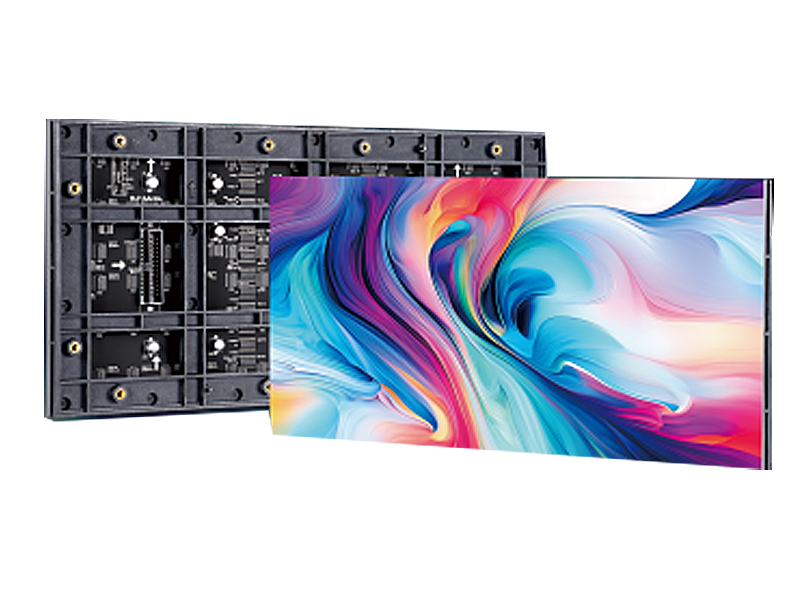
Front access: Modules, power supplies, and receiving cards are all removed magnetically or with quick-release tools from the front. Zero access space required – ideal for wall-mounted installations, space-constrained locations, or when the backside is glass or a solid wall.
2. Decision Matrix: Which Option Is Right for Your Project?
| Dimension | Wall-Mounted + Rear Access | Wall-Mounted + Front Access | Suspension mounting | Pole-Mounted |
|---|---|---|---|---|
| Space footprint | 0.8m passage required behind screen | Flush to wall – no rear space needed | Overhead mounting points required; clear area below | Independent ground footprint; clearance needed around |
| Initial cost | Medium (simple steel structure needed) | Slightly higher (front-access cabinets) | Medium–High (suspension truss) | High (foundation + steel structure) |
| Maintenance difficulty | Low (personnel can enter and work) | Medium (requires suction cup tool) | Medium–High (requires lift / cherry picker) | High (requires altitude installation) |
| Best scenarios | Showrooms, conference rooms | Reception video walls, glass curtain walls | Theaters, stadiums | Outdoor billboards, plaza landmarks, traffic hubs |
Key Conclusions:
✅ Limited budget + sufficient space → Opt for rear maintenance, with the lowest labor cost for future upkeep.
✅ Limited space + wall-mounted installation → Choose front maintenance. The unit price of modules may be 10% higher, yet it saves the cost of dismantling and modifying access passages.
✅ High-ceiling spaces / non-load-bearing walls → Ceiling hoisting is a must, requiring dual anti-fall protection measures.
3. How to Lock In Low-Cost Maintenance During the Installation Phase?
✅ Front Access or Rear Access?
If your installation space is narrow (e.g., flush to wall or embedded), do NOT choose rear access just to save upfront budget – you may end up with no room to reach in for repairs. Opting for high-quality front-access cabinets is the smart way to "spend a little now to save a lot later."
✅ Module-by-Module or Pre-Assembled Cabinets?
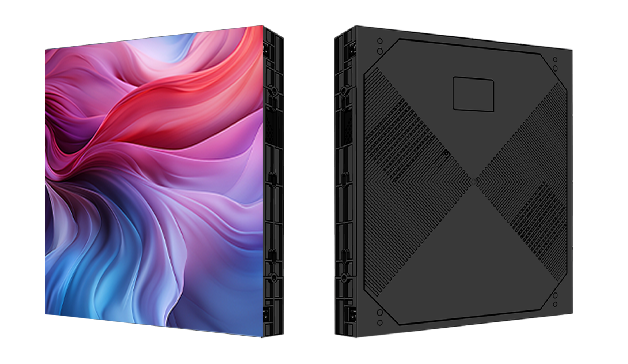
For indoor fixed installation with fine pitch (P2 and below) where extreme flatness is critical, we recommend using die-cast aluminum cabinets. Although the initial investment is 15%–30% higher than module-by-module assembly, the cabinet provides inherently high flatness and stability, preventing seam misalignment later due to thermal expansion/contraction – significantly reducing debugging and calibration costs.
Whether for an outdoor pole-mounted screen or an indoor large display, proper grounding is the last line of defense against static discharge and lightning strikes. A few hundred dollars saved on grounding materials upfront could turn into thousands of dollars in motherboard replacement costs later.
4. Interaction & Next Episode Preview
Today's Question: Where do you plan to install this LED screen? What are the load-bearing conditions of the wall or ceiling? Is maintenance access space reserved in advance?
Next Episode Preview: Smart Classroom 05 | The Secret to Rental Displays' "Fast Rigging & Fast Dismantling": Flight-Case Cabinets, Quick-Lock Connectors, and Touring Logistics Guide