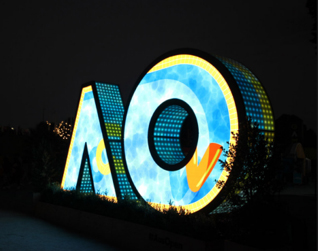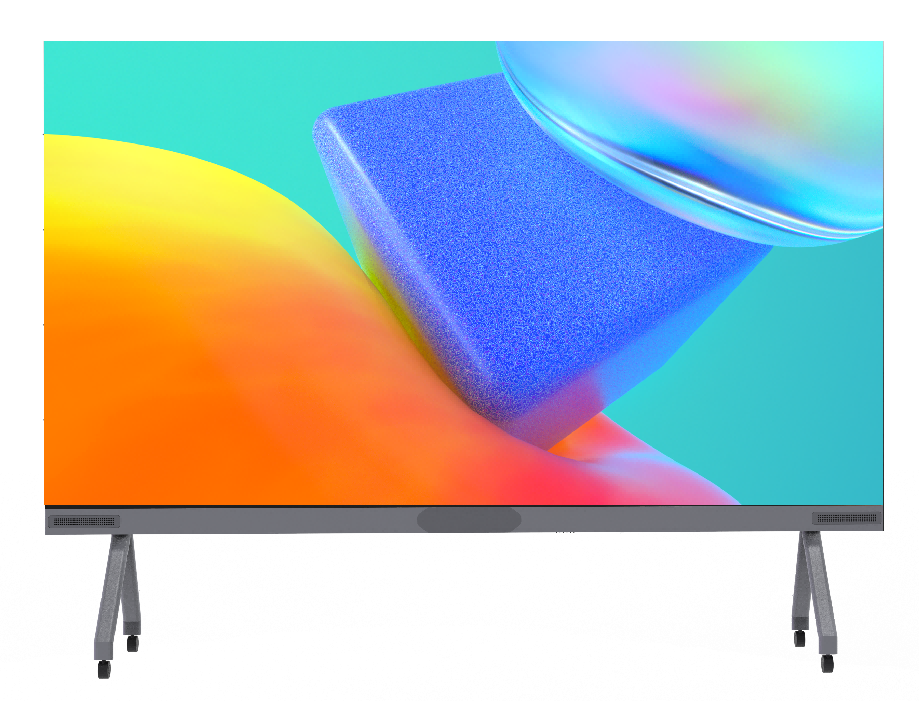
The moment when the huge LED screen in the mall atrium lit up was truly shocking. But few people know that the process of this screen from design to implementation is often more complex than the content it plays. The installation team is never just facing the simple task of "hanging it up" - structural load-bearing, heat dissipation channels, electrical matching, and visual coverage. Any link that falls off the chain may turn this "facade" into a hidden danger.
1、 Structural load: The wall does not speak, but the load-bearing capacity speaks
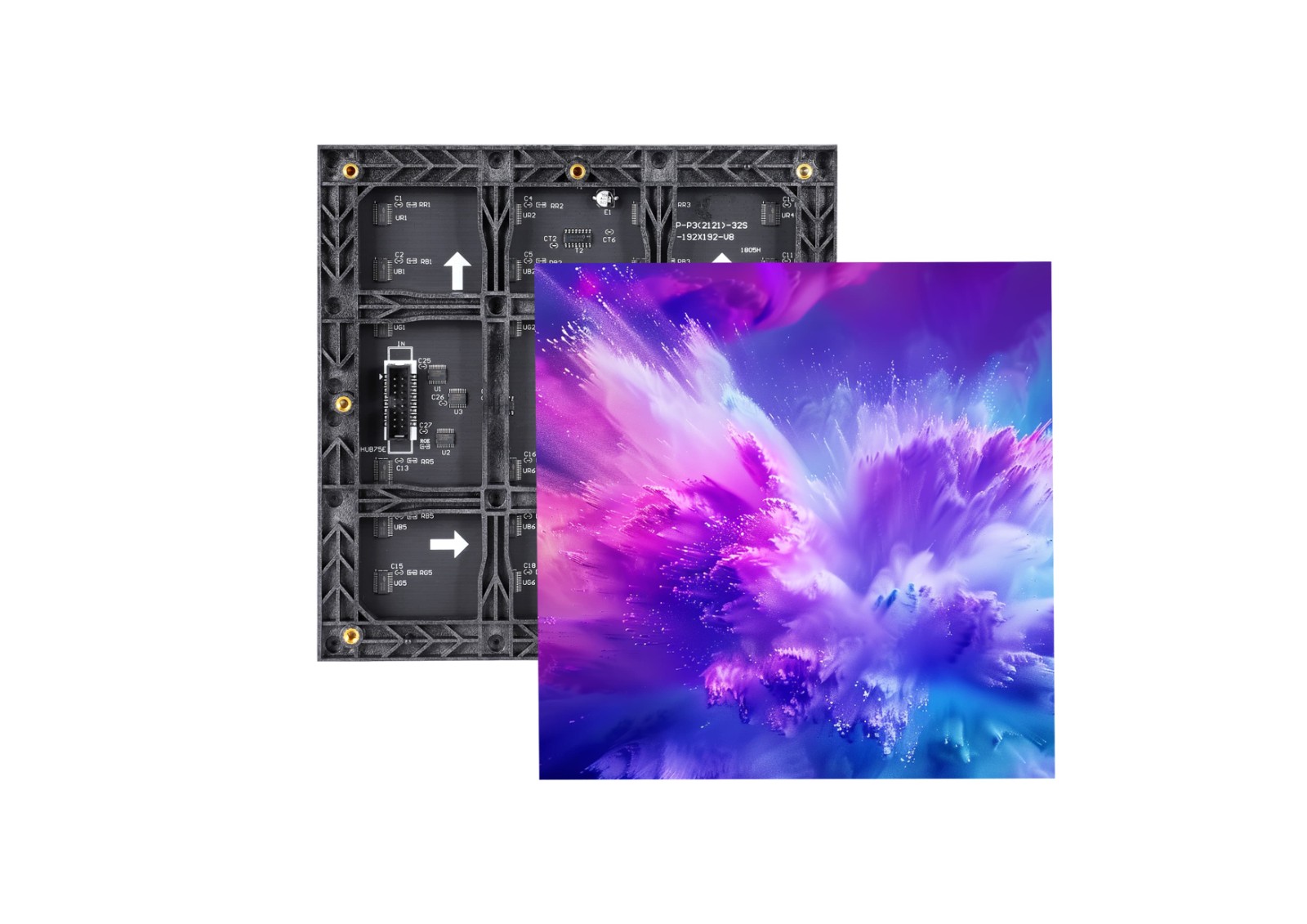
Most shopping mall buildings are not designed for hanging heavy electronic equipment. A P3 sized indoor LED screen typically weighs between 40 and 60 kilograms per square meter, while a giant screen hanging in the atrium can easily weigh around 30-40 square meters, with a total weight of over two tons. What is the concept of two tons? Equivalent to more than twenty adult males hanging on the wall at the same time.
What must be done before installation is not to measure the flatness of the wall, but to verify the original structural drawings. Is the curtain wall keel made of I-beam or square tube? Are the connecting nodes welded or bolted together? These pieces of information directly determine the selection of the post embedded part scheme. I have seen a case where the construction plan was convenient and directly fixed to the aluminum-plastic panel decorative layer with chemical anchor bolts. However, on the third day of hanging the screen, the decorative layer deformed as a whole and almost fell off. The mall is crowded with people, and any structural lucky mentality cannot withstand scrutiny.
Even more challenging is the renovation of old shopping malls. The original drawings may have been lost long ago, and the corrosion of structural components is unknown. At this point, only on-site tensile tests can be conducted - selecting several points and applying a tensile force of 1.5 times the design load to see if the structure has displacement or cracks. Although this verification process is time-consuming, without it, all subsequent installations would be castles in the air.
2、 Heat dissipation channel: Heat will not disappear, only transfer
The heat generated by the screen during operation is often underestimated. A high brightness outdoor display screen can consume over 800 watts per square meter, and even indoor models can consume around 300 watts. If these heat are trapped in the interlayer between the back of the screen and the wall, it will bring two problems: first, the LED light's pearl decay will accelerate, and the originally nominal lifespan of 100000 hours may significantly dim within three to five years; Secondly, the stability of the driver IC decreases in high-temperature environments, and the probability of dead lights and color cast increases significantly.
The choice of heat dissipation scheme depends on the installation environment. Embedded screens have limited space on the back and require forced air cooling - designing air inlet and outlet ports to form a convection channel, coupled with an axial fan for continuous heat dissipation. Hanging installation is relatively more relaxed and can utilize natural convection, but it is necessary to ensure that there is at least a 20 centimeter gap between the screen and the wall.
Interestingly, many installation teams will be meticulous in their heat dissipation design, attempting to reduce the number of fans to lower costs. This approach may not be a problem in winter, but in summer, when the air conditioning load in shopping malls is already high and the screen heat dissipation efficiency decreases, the entire system will fall into a vicious cycle - temperature rise, resistance increase, power consumption increase, and temperature further increase. Rather than saying that heat dissipation is an auxiliary system, it is more accurate to say that it is the infrastructure that determines the stable operation of the screen.
3、 Electrical matching: The thicker the power cord, the better
This statement may sound a bit counter common sense, but it is indeed the case in reality.
The distribution points provided by shopping malls often deviate from the rated power of the screens. When the power supply distance is too long, the voltage drop on the cable can cause the screen input voltage to be lower than the rated value, the driver IC to work abnormally, and the screen to flicker or even black. Some construction companies may directly increase the wire diameter to solve the problem, but this can only alleviate the pressure drop and cannot solve the problem of three-phase balance.
The screen belongs to a nonlinear load and has significant harmonic interference. If harmonic control is not carried out when connecting to the original power distribution system of the shopping mall, not only will the screen itself be affected, but other equipment on the same power supply line, such as the cash register system and lighting system, may also inexplicably malfunction. The standard installation method is to independently lead out a dedicated circuit from the main distribution cabinet, configure a filtering device, and set up a local distribution box near the screen to achieve graded protection.
There is another easily overlooked detail in the electrical field: the grounding system. The control system of LED screens is extremely sensitive to electrostatic interference, and the grounding resistance must be controlled below 4 ohms. The original grounding system of the shopping mall building may not meet this requirement, and independent grounding electrodes may need to be added if necessary.
4、 Perspective coverage: Pixels have their own "temperament"
The display screen has a physical characteristic: the brightness of the light emitted by each pixel varies when viewed from different angles. This is called perspective characteristic.
A common mistake in mall installation is to place the optimal viewing area of the screen in a no man's land. If a screen with a horizontal viewing angle of 140 degrees and a vertical viewing angle of 120 degrees is installed at a height exceeding 8 meters and the downward tilt angle is insufficient, the image seen in the ground area on the first floor will appear noticeably bright on the top and dark on the bottom. Even more troublesome is that the viewing position of the mall is dynamic - consumers may stop in front of the screen, pass by at a 30 degree angle from the side, or overlook from the second floor escalator. A design with a single planar perspective cannot cover all scenes.
The mature solution is to use module splicing angle adjustment. By changing the angle between the modules, the screen as a whole presents a micro arc or line shape, expanding the effective viewing angle coverage range. This technology requires high precision for the structural skeleton, and the processing error of the keel must be controlled within 2 millimeters, otherwise there will be obvious bright or dark lines at the joint seam, which will affect the appearance.
5、 After sales channel: Installation is the starting point, not the end point
This is often overlooked by the client, but those who have worked in mall operations are aware of its significance.
After three years of screen operation, the high incidence period of malfunctions has arrived. Aging of power modules, oxidation of wiring, and dead LED chips are all common losses. If there was no reserved maintenance channel during installation, maintenance personnel would not be able to access the faulty module from the back. Some projects, in order to pursue the aesthetic effect of "seamless fit", completely seal the screen inside the decorative structure. As a result, during maintenance, it is necessary to damage the surface and set up scaffolding throughout the entire building. The cost of a small repair is equivalent to half of a new screen.
The design of the maintenance channel is not complicated: a maintenance door is reserved on the side, and more than 60 centimeters of operating space is reserved on the back. The module adopts a front maintenance structure. But there is a barrier of cost control between 'not complicated' and 'done well'. If Party A lowers the price at this stage, the construction party will naturally compromise on maintenance convenience. The cost of this compromise only truly became apparent a few years later.
Ultimately, the installation ofShopping mall leddisplay tests not the breakthrough of a single technical point, but the understanding of the coupling relationship of the entire system. The five dimensions of structure, heat dissipation, electrical, perspective, and maintenance are intertwined, and any one that is neglected will expose problems in other dimensions. However, those screens that have been installed for three or five years and still operate stably, looking back, are only the ones that paid more attention to each link at the beginning.