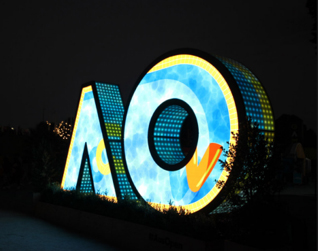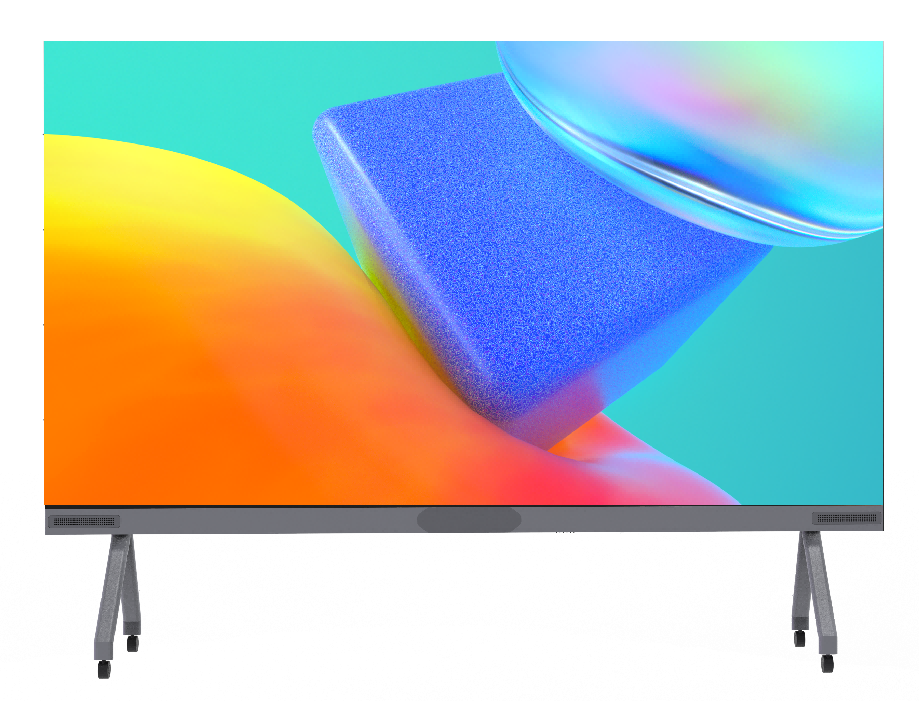
In today's rapidly evolving display and lighting technology, flexibleled has already jumped out of the laboratory and entered every aspect of our lives - from the light and shadow decoration of Ferris wheels to the atmosphere creation of car interiors, from creative exhibitions in shopping malls to outdoor landscape lighting. With its "soft" characteristics, it breaks the form constraints of traditional LED. Speaking of which, many people are curious about the strength of flexibleled. In fact, its advantage is not just a single "bendability", but a multidimensional combination of strength that adapts to the needs of more and more segmented scenarios.
Flexible adaptation, fitting every creative form
The most intuitive advantage of flexibleled is its ability to bend and stretch, which is also the core difference from traditional rigid LED. Unlike traditional LED screens with rigid cardboard blocks, flexibleleds use high toughness FPC flexible circuit boards with a minimum bending radius of 2-5cm. They can fit the curved skeleton of Ferris wheels, as well as adapt to irregular structures such as cylinders and waves, and even achieve 180 degree curved installation.
In practical applications, the convenience brought by this adaptability is obvious. For example, in the lighting of urban landmark Ferris wheels, traditional rigid light strips cannot fit complex curved steel beams and are prone to spot breakage, while flexibleleds can seamlessly fit every line, outlining a complete and smooth light and shadow contour, making the Ferris wheel like a suspended halo in the night. Perhaps some people may ask, will bending affect its use? Don't worry, high-quality flexibleleds have undergone tens of thousands of bending tests and their performance remains stable, fully meeting long-term usage needs.
Ultra thin and lightweight, achieving an aesthetic experience of "seeing light but not seeing light"
The lightweight and thin characteristics of flexibleled completely solve the pain points of traditional LED's heaviness and abruptness. In most cases, its thickness is only a few millimeters, and the thinnest can even reach 0.8 millimeters. Its weight is more than 60% lighter than traditional LED screens, and it hardly occupies additional space after installation, nor does it destroy the original aesthetic structure of the scene.
This is fully reflected in high-end commercial spaces and automotive interiors. The interior "projection" technology of Hongqi Guoyue adopts a flexibleled module with a thickness of only 6 millimeters, which is completely hidden under the interior leather texture when not lit, integrating with wood grain and leather; After lighting up, the dynamic light and shadow perfectly match the interior decoration, creating an immersive feeling of a "mobile landscape gallery". In the exhibition hall of the shopping mall, flexibleled can be directly attached to the curved wall without the need for complex frame support, truly achieving the advanced effect of "seeing light but not light", seamlessly integrating spatial aesthetics with light and shadow art.
Excellent display, dual online image quality and texture
Many people mistakenly believe that flexibleleds focus on form and their image quality will be compromised, but in fact, the opposite is true. It inherits the high-quality display gene of LED, coupled with the special process of flexible substrate, the display effect is actually more advantageous. flexibleled adopts self luminous technology, with black pixels that can be completely turned off, nearly infinite contrast, and wider color gamut coverage. It can present more realistic and delicate colors, even for complex dynamic images, without problems such as ghosting and color distortion.
Even more rare is that its wide viewing angle can reach 178 degrees, and the image quality will not deteriorate no matter from which angle it is viewed. Just like the cylindrical flexible screen in a shopping mall, whether viewed from the front or passing by from the side, clear and smooth images can be seen; In the immersive exhibition hall, multiple flexibleleds are seamlessly connected and have uniform image quality, allowing the audience to fully experience the charm of light and shadow. This is also why many exhibition halls can extend the average stay time of the audience by more than 40% after using it.
Easy installation, significantly reducing construction and transportation costs
Traditional LED screen installation often requires the construction of complex frameworks, long construction periods, and high costs, especially in irregular scenes where the construction difficulty doubles. The emergence of flexibleled directly simplifies the installation process. It does not require complex fixation and can be attached to various material surfaces such as walls, metals, and glass with just one glue gun. The installation efficiency is improved by more than 60% compared to traditional LED screens.
In addition, its lightweight characteristics also make transportation more convenient. Traditional LED screens are bulky and fragile, requiring special protection during transportation, while flexibleleds can be curled and stored, significantly reducing their size. This not only saves transportation space but also reduces losses during transportation. For decoration and construction companies, this undoubtedly saves a lot of time and labor costs, especially for outdoor large-scale projects, where the convenience of flexibleled is highlighted.
Energy saving and durable, balancing environmental protection and long-term use
In the current emphasis on environmental protection and energy conservation, the low-power advantage of flexibleleds is particularly eye-catching. It adopts a low-power driver chip, with a measured power consumption of only about 45% of traditional LED screens, and a power of less than 300 watts per square meter. If it runs continuously for 24 hours, it can save a lot of electricity bills in a year. For long-term use scenarios such as shopping malls and outdoor advertising, it can reduce operating costs in the long run.
And its durability should not be underestimated. The high-quality flexibleled adopts silicone packaging technology, with a waterproof and dustproof level of IP65 or above, which can adapt to extreme environments ranging from -30 ℃ to 80 ℃. Whether it is humid outdoor or a barbecue square with a lot of oil smoke, it can operate stably. What's even more considerate is that its modules support individual replacement, so in case of a malfunction, there's no need to replace them as a whole. Maintenance is simple and convenient, further reducing operation and maintenance costs.
In fact, at the end of the day, the advantage of flexibleled is essentially the advantage of "adapting to needs" - it breaks the limitations of traditional LED forms, balances aesthetics, image quality, convenience, and economy, meets the needs of creative design, and solves many pain points in practical applications. With the continuous upgrading of technology, I believe it will enter more scenes and unlock more possibilities for light and shadow.